Designing for Context: Why a Lagos Office Shouldn’t Look Like a London One
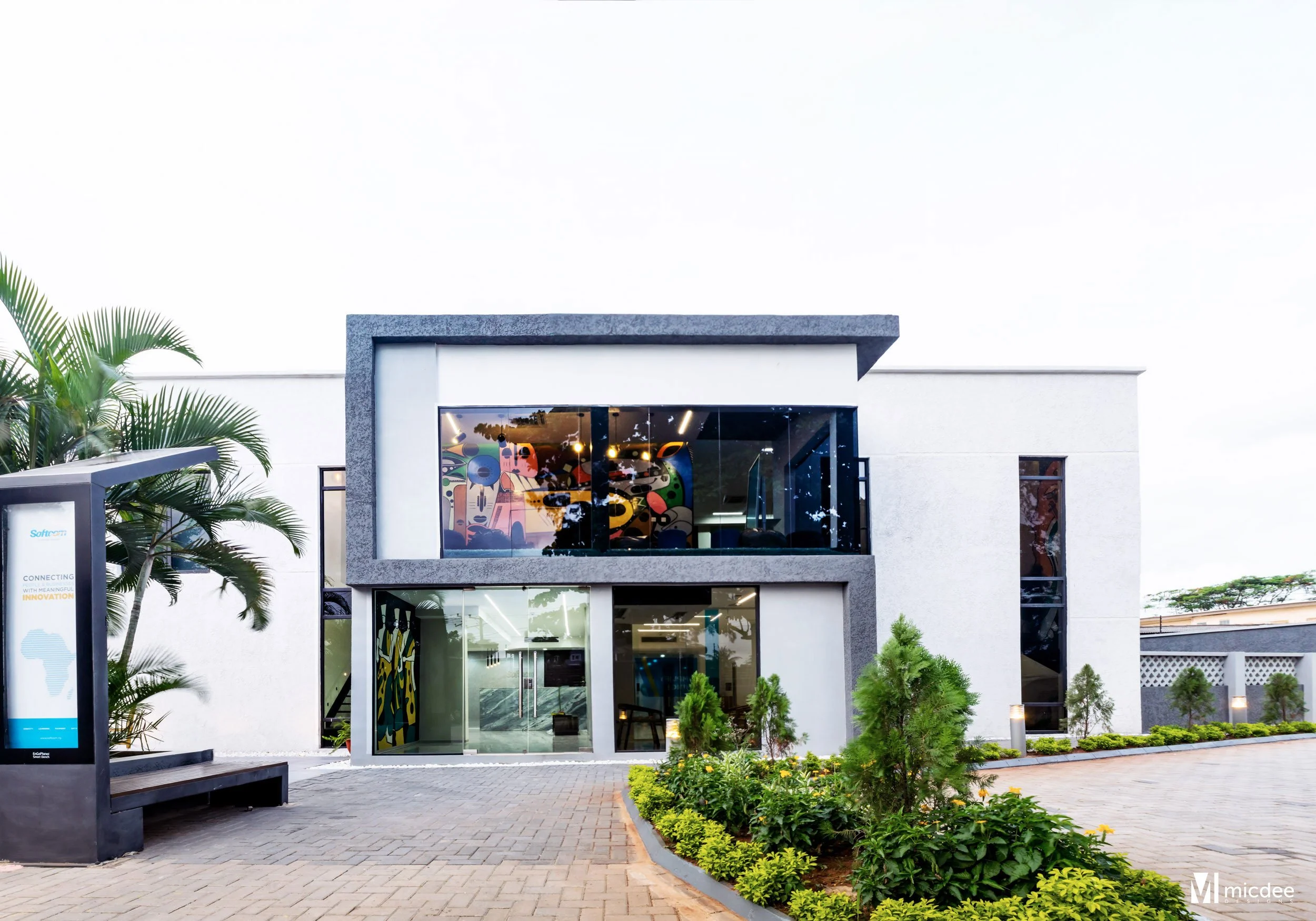
Softcom HQ | Micdee Designs, 2019
Designed from the ground up; exterior, interior, and landscape. The building’s facade, palm-lined approach, and glazed frontage were conceived as a single statement about who Softcom is as a company, not just where they work.
There is a certain kind of Lagos office that looks like it was designed somewhere else. The furniture is imported. The palette is neutral. The layout follows a template that could belong anywhere in the world. It is modern, in the way that modern has come to mean generic. And it communicates almost nothing about the business that occupies it or the city it sits in.
This is the gap that contextual design is trying to close.
What the best global companies already understand
Multinationals that operate across multiple countries have had to grapple with this question for decades. How do you maintain a coherent global brand while designing spaces that feel genuine to each location?
The answer the best of them have arrived at is this: global standards, local expression. The office in Seoul looks like it belongs in Seoul. The office in Dubai looks like it belongs in Dubai. The office in Lagos should look like it belongs in Lagos, not because it is decorated with Nigerian motifs, but because it was designed for the specific people who will use it, in the specific cultural and environmental context they live and work in.

UAC Nigeria HQ | Micdee Designs, 2022
A breakout lounge designed to feel less like an office and more like a place people want to be; warm tones, soft seating, and a kitchen visible in the background signal a workplace that thinks about the whole person, not just the workstation.
““The office in Nigeria should be designed for Nigeria. And so that’s why; since we don’t have standards across board, many businesses just want to create a modern office for the sake of it.””
What contextual design actually means
It does not mean every office in Lagos should look the same, or that there is a single Nigerian aesthetic to apply. It means the design process starts with the specific people in the space; how they work, how they interact, what the physical environment of the city demands, what the culture of the specific business is and builds outward from there.
It means acknowledging that Lagos is hot, and that thermal comfort is not an afterthought. That power infrastructure is unreliable, and that lighting design has to account for that. That traffic means some people arrive at 7am and some at 10am, and that the office should accommodate both without either feeling like an intrusion.
It means designing furniture for how Nigerians actually sit, not how furniture catalogues assume people sit. It means understanding that the relationship between hierarchy and space is different here than it is in a flat Scandinavian open plan, and that the design should reflect that honestly rather than imposing a foreign model.
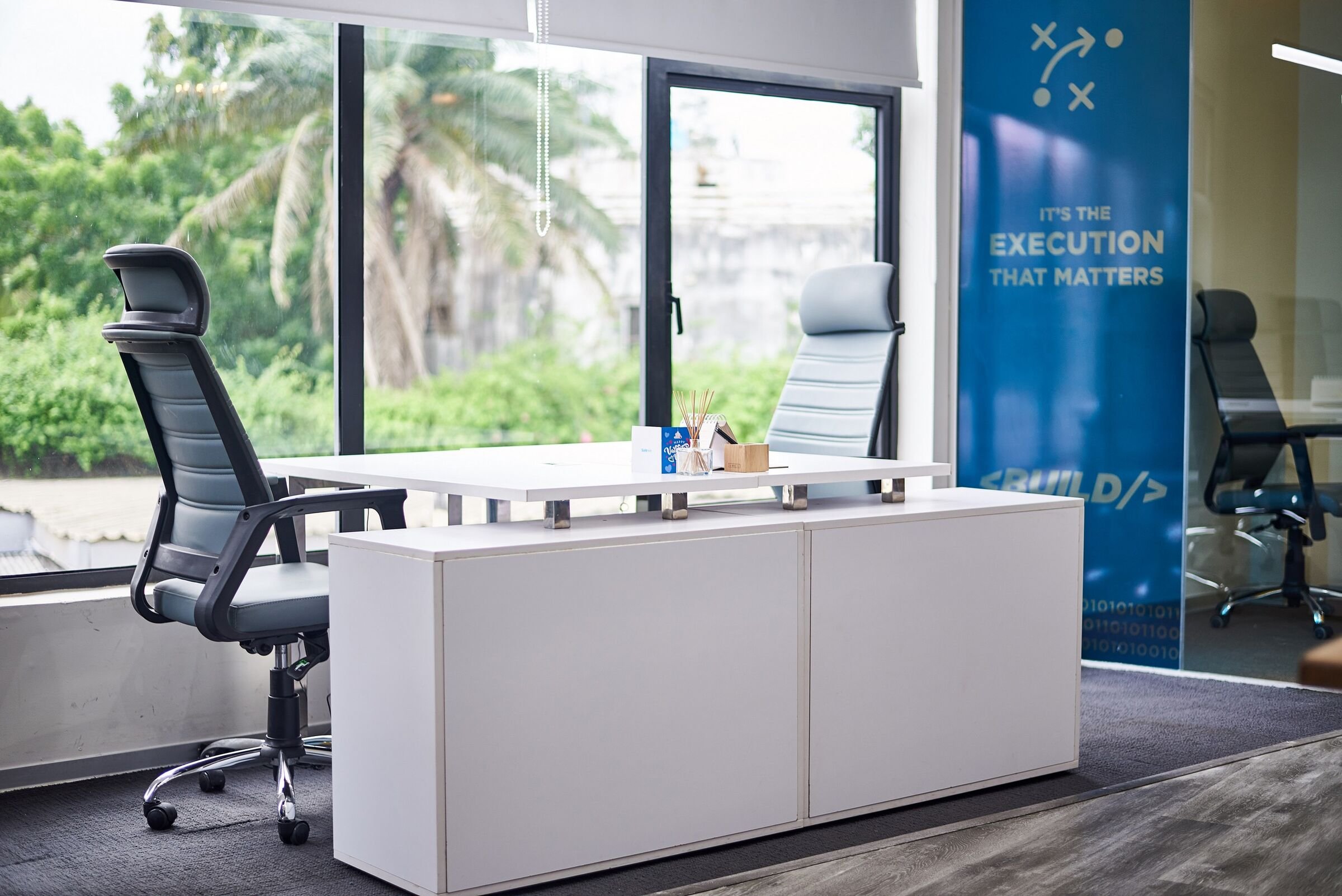
Workstations positioned alongside full-height glazing at a Micdee-designed office in Lagos. Natural light reduces dependence on artificial lighting throughout the working day, while the cross-ventilation created by the glazed facade helps manage thermal comfort; two design decisions that make the space more sustainable without requiring a green building certification.
Softcom HQ | Micdee Designs, 2019
The risk of designing without context
An office that is not designed for its people and context will eventually reveal that fact. The beautiful lounge area that nobody uses because it is positioned in the wrong part of the floor. The open plan that was intended to foster collaboration but actually just made concentration impossible. The materials that looked stunning in the render but were not specified for Lagos humidity.
These are not failures of aesthetics. They are failures of understanding. And they are almost always the result of a design process that started with inspiration rather than insight.
Sustainability through context
There is also a sustainability argument for contextual design that is specific to the African market. The Western model of sustainability; green buildings, certified materials, carbon accounting is not accessible to most businesses in Nigeria at the scale it is practiced elsewhere. Building a LEED-certified office is awfully expensive. Most businesses simply cannot afford it.
But sustainability in the Nigerian context means something equally valuable: building something that lasts. Designing for longevity. Specifying materials that hold up in the local climate. Planning the space for the growth of the business rather than its current state. Not building something that needs to be ripped apart and redone in two years.
Done right, contextual design is inherently sustainable. Because when a space genuinely works for the people in it, in the city it is in, for the business it belongs to, it does not need to be fixed.
If you are thinking about how to design an office that genuinely reflects who your business is and where it operates, we would be glad to have that conversation.