Designing the African Workplace: How Design Shapes the Future of Work
What does it mean to design a workplace for Africa?
Not a generic modern office lifted from a LinkedIn inspiration post but a space that is genuinely contextual, purposeful, and built for the people who will actually use it every day?
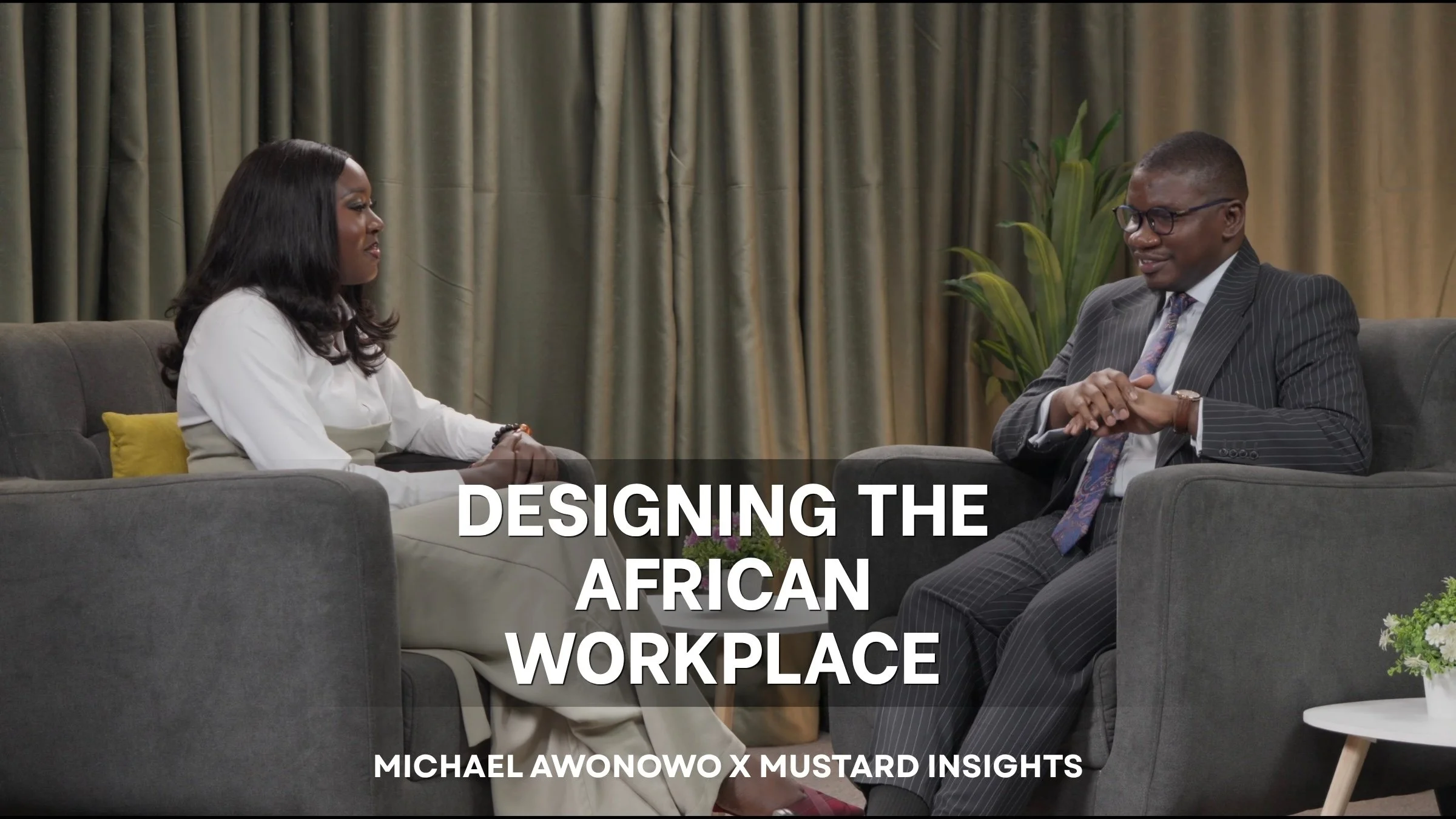
These are the questions Michael Awonowo, Founder of Micdee Designs, explored in a recent conversation with Mustard Insights. Over 32 minutes, the conversation covered the state of workspace design in Nigeria, the economic and social forces reshaping how businesses think about their offices, and where the industry is headed.
Here are the ideas that stood out.
The office is not going away. It just needed to get better.
Office occupancy levels in Nigeria have risen from around 60% in 2022 to 75% in 2024, the opposite of what many predicted post-COVID. Michael's explanation is straightforward: humans are social. Remote work works at the beginning. Over time, without the friction of being around other people, productivity erodes.
But the return to the office is not unconditional. Younger workers; millennials and Gen Z are not returning to spaces that feel like relics. They are returning to offices that were designed for them. That distinction is driving a wave of workspace redesigns across Lagos and beyond.
“Businesses have realised that the office is affecting their productivity levels, their efficiency levels. And so now people are making those tough decisions.”
Offices are being designed like software.
Ten years ago, even the most modern offices followed the same template: workstations, meeting rooms, a canteen. That era is ending. The trend Michael identifies is offices designed for purpose; spaces that reflect how a specific team actually works, not how offices are supposed to look.
In his words, offices should stop looking like offices. An office for a creative team might look like a hotel lobby. An office for an engineering firm might look like something closer to a workshop. The form follows the function of the specific people in the space, not a generic idea of what a professional environment should be.
Sustainability in Africa means something different.
When Michael talks about sustainability, he is not talking about green walls and LEED certifications. In the Nigerian context, sustainability means building spaces that last, buildings that do not need to be torn apart and redone every two years.
Most businesses in Nigeria cannot afford to create green buildings in the Western sense of the word. But they can build offices that are planned for growth, designed to serve the role rather than the specific person in it, and built with materials and craftsmanship that hold up over time. That is the sustainable design conversation that matters here.
The Micdee advantage: offices that feel right.
Michael describes Micdee's approach with a phrase that is harder to explain than it sounds: the office should feel like another employee. Not a beautiful space that people admire from a distance. A functional, personal environment that feels like it belongs to the business, like it was always supposed to be there.
The measure of success is not the reaction on handover day. It is the absence of surprise. If a client is shocked by how good the finished space is, something went wrong in the process. The goal is that they saw it coming, that they were taken along every step of the journey and that walking in on the first day feels like arriving somewhere they already know.
“If we surprise our clients, we failed. There should be that confidence that you’re going to do a good job. They should be excited. But they should not be shocked.”
What comes next.
Micdee is moving toward thought leadership and education as much as project delivery. Michael's ambition is for Micdee to be the first name anyone in Africa thinks of when they think about workplace design, not just for the quality of the finished spaces, but for the thinking that produced them.
Regional expansion is also underway, with conversations already happening about entering select markets across Africa. And there is a longer-term interest in exploring manufacturing; solving the supply chain problems that currently force African-based firms to rely on imported materials for quality work.
The 10-year prediction: AI will design offices the way Spotify curates playlists. Mood, taste, personality. Purpose-built for the specific people using the space, automatically. It is already happening in nascent form. In a decade, it will be the norm.
Watch the full conversation below. And if you are thinking about what your office could be doing for your business, we would be glad to start that conversation.