Experience Centres: The New Frontier of Workplace Design in Nigeria
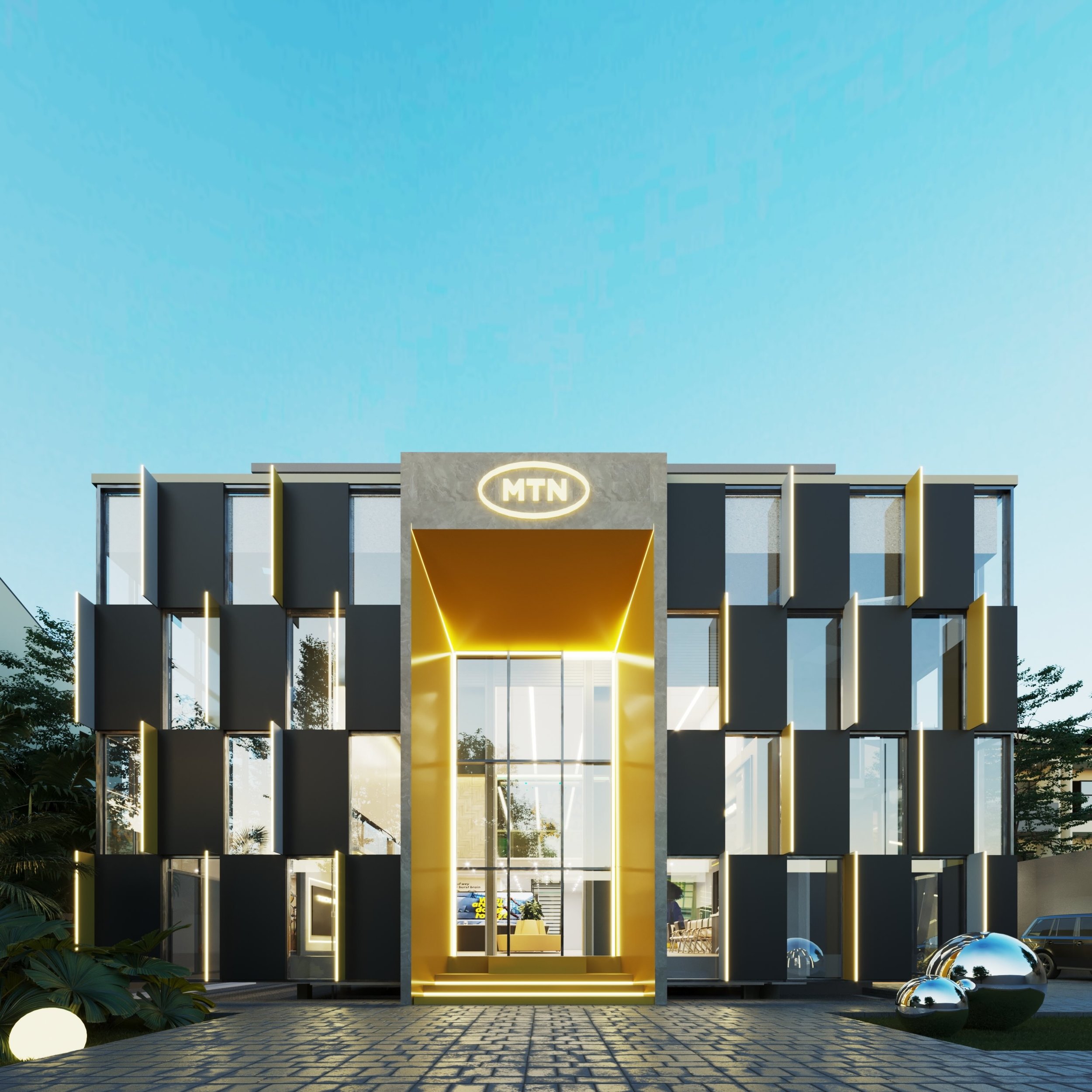
MTN Yello City, Lagos, Nigeria designed by Micdee
The most forward-thinking organisations in Nigeria have stopped briefing for a place to work. They are briefing for a place that does a job.
Walk into a certain kind of space today and you will struggle to name it. It isn’t quite an office; there are no rows of desks demanding your attention. It isn’t quite a showroom; nobody is hovering to close a sale. And it isn’t a reception area, though it welcomes you. What you have walked into is an experience centre, and it is fast becoming one of the most deliberate investments a brand can make.
For years, the conversation around corporate real estate in Nigeria was framed in square metres and workstation counts. How many people can we seat? How much will the fit-out cost per head? Those questions still matter. But a growing number of leading organisations are asking a more ambitious one: what should this space actually do for us? And increasingly, the answer is that a space should not merely house a team. It should tell a story. It should make the brand felt; physically, the way a handshake does..
Most of what gets called an experience centre in Lagos right now is a reception with a TV wall. That’s not what we mean.
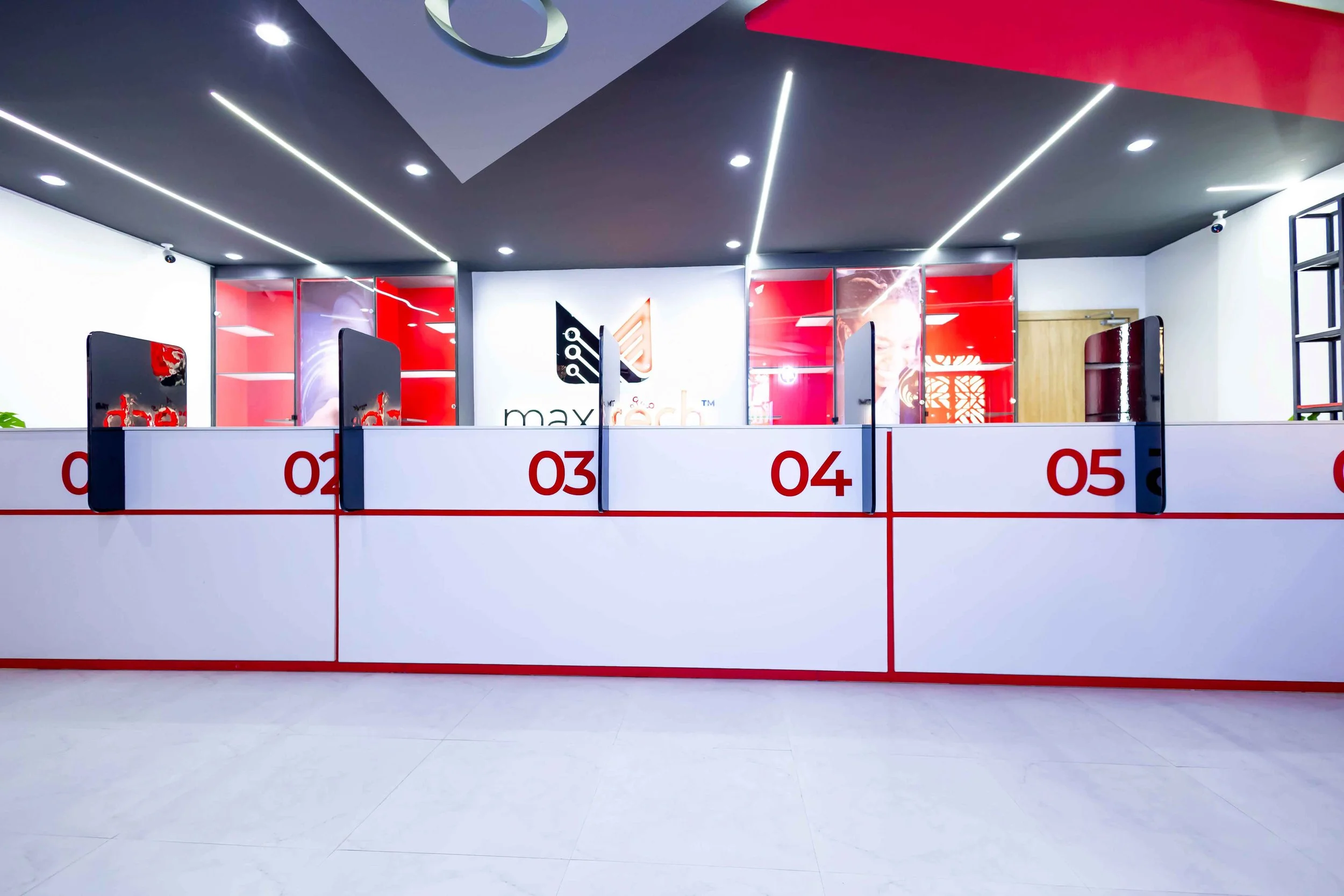
Maxitech headquarters retail and workspace interior, designed by Micdee
What an experience centre actually is
It helps to be precise, because the term is easy to misuse. A lobby greets you. A showroom displays product. An experience centre does something more layered: it choreographs a journey. From the moment a visitor steps through the door, the space is working; communicating who the organisation is, immersing the visitor in its world, and often blending customer engagement seamlessly into the working environment itself.
The difference is intent. A showroom asks you to look. An experience centre asks you to feel something, understand something, and leave with a clearer sense of the brand than any brochure could deliver. It is a strategic asset designed around the visitor’s journey.
Why now, and why Nigeria
Walk through Victoria Island today and count how many firms have rebuilt their ground floor in the last three years. That’s not a coincidence. Customer experience has become one of the most contested battlegrounds in business. In a market crowded with capable competitors, the brands that win are often the ones that make people feel something.
Physical space is one of the very few channels an organisation controls completely. There is no algorithm between you and your visitor, no platform taking a cut of the attention. The space speaks directly.
For Nigerian organisations in particular, this matters. In sectors where credibility is hard-won, sectors like energy, finance, technology, professional services; a well-conceived physical environment does work that marketing spend alone cannot. It signals permanence. It signals seriousness. As clients grow more sophisticated and expect to experience a brand rather than simply transact with it, the experience centre moves from a nice-to-have to a genuine differentiator.
“A showroom asks you to look. An experience centre asks you to feel something and leave understanding the brand better than any brochure could manage.”
What makes one work
Not every ambitious space succeeds. The ones that do tend to get four things right.
Narrative. Every effective experience centre is built around a story the space is trying to tell. Before a single finish is chosen, the question is: what should a visitor understand and feel by the time they leave? That story becomes the organising logic for every decision that follows.
Technology. Interactive displays, immersive media, and digital touchpoints can elevate a space; but only when they serve the narrative rather than decorate it. Technology used as spectacle dates quickly. Technology used with purpose deepens the experience and earns its place.
Materiality. The most future-facing spaces are not cold. Texture, finish, and material warmth ground the high-tech experience in something human, ensuring a visitor feels welcomed rather than processed. The interplay between the digital and the tactile is often what separates a memorable space from a sterile one.
Journey. Finally, the best experience centres are designed as a sequence. How does a visitor move through the space? What do they encounter first, and what lingers with them last? Choreographing that path; the reveal, the pause, the moment of immersion is what turns a collection of rooms into a single, coherent experience.
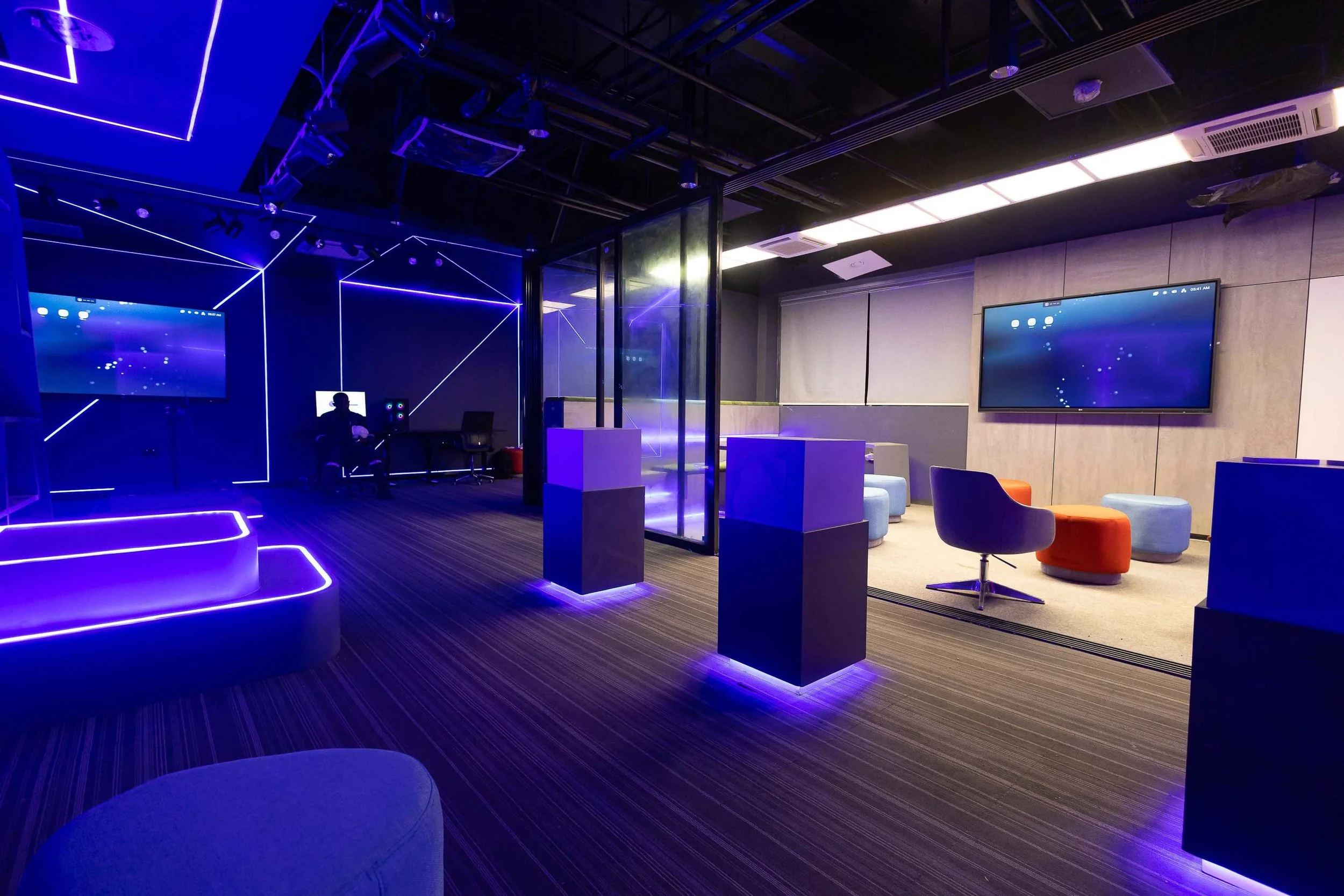
Nigeria LNG Innovation and Experience Center, designed by Micdee
Proof in the work
This is not theory for us. When we designed the Innovation Hub and Experience Centre for Nigeria LNG, the brief was explicitly to create a space where visitors could be immersed in the story of Nigeria’s LNG industry and leave inspired. We told a story through interactive floor displays, a hologram table, a VR room, and a carefully layered material palette that kept the high-tech experience grounded and human.
Getting that balance right took multiple iterations; for instance, the first material schemes read as cold the moment the displays came on, and we tweaked and reworked some elements until the space felt as human as it did futuristic.
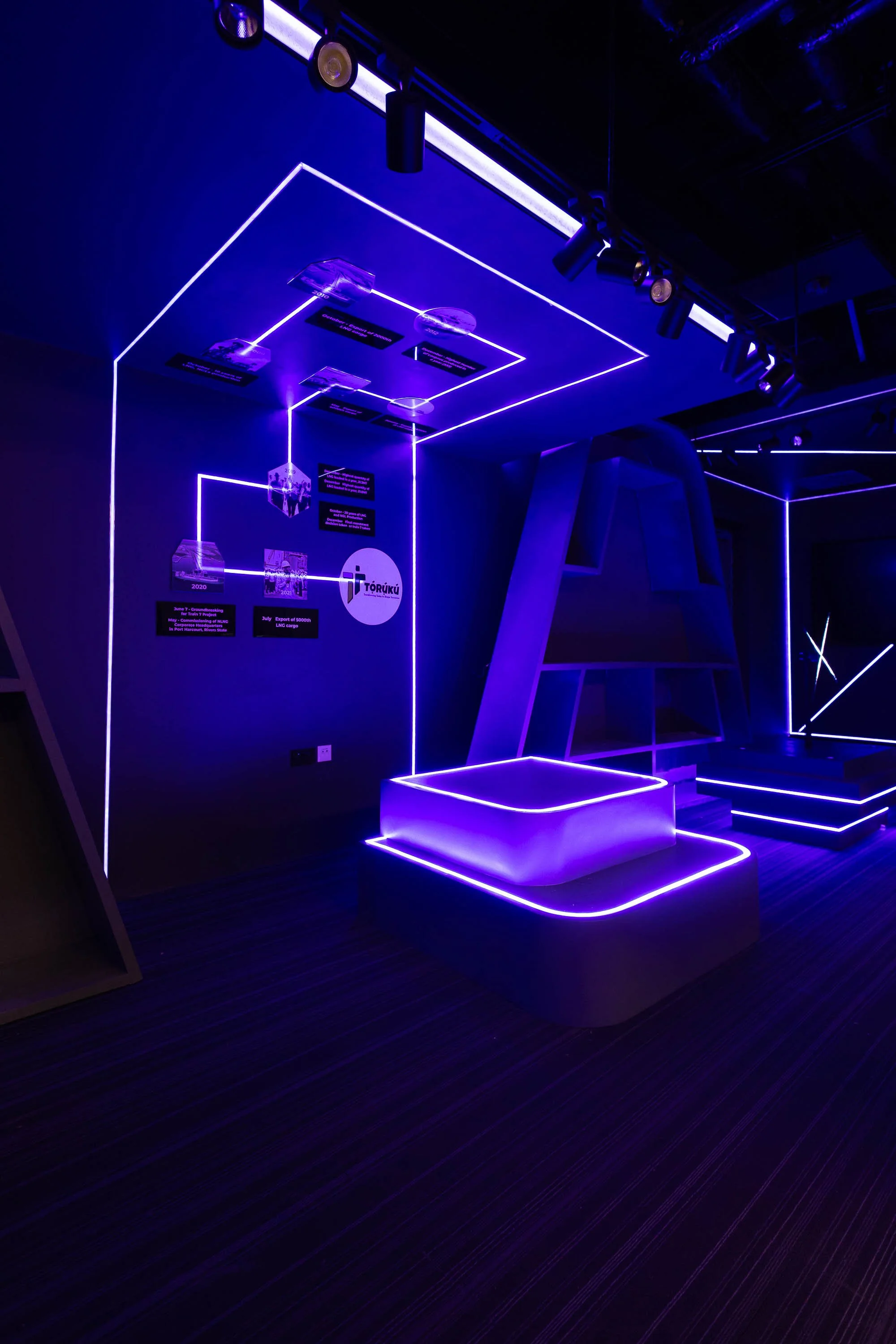
Nigeria LNG Innovation and Experience Center, designed by Micdee
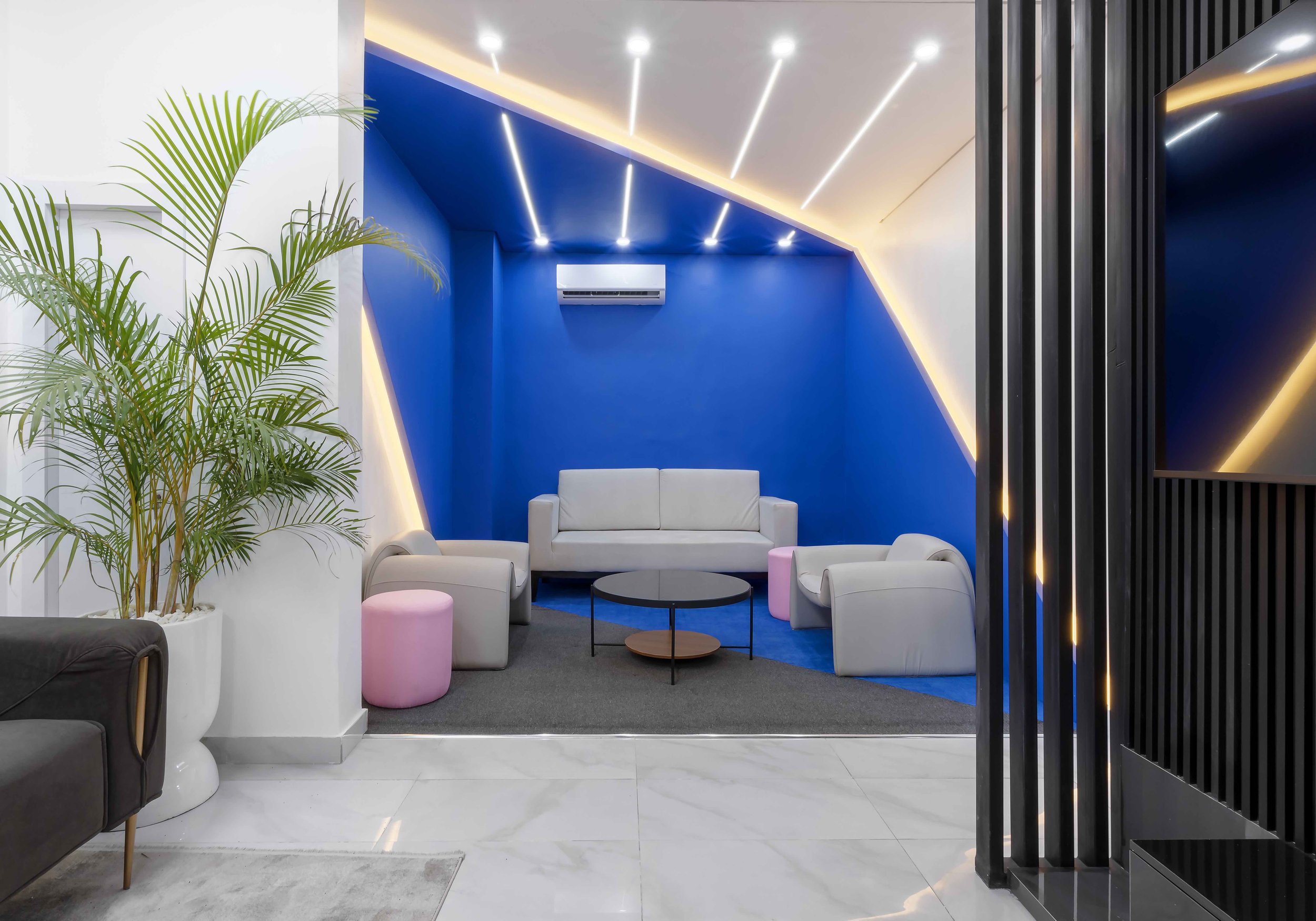
Piggyvest Customer Experience Center, designed by Micdee
With Piggyvest, we delivered an experience centre that brought a digital-first brand into physical space in a way that felt true to its identity. And with Maxitech, we dissolved the boundary between work and commerce entirely; designing a headquarters where the retail floor and the workspace flow into one another, so that the brand story unfolds continuously from the moment a customer walks in. In each case, the space was not an afterthought to the business. It was an expression of it.
Who should be thinking about this
It would be easy to assume experience centres belong only to consumer-facing brands with products to display. They don’t. Any organisation that hosts clients or competes for talent has something to gain from thinking this way. The question is no longer whether your office is large enough or smart enough. It is whether your space is doing everything it could be doing on your behalf.
The office is no longer just where work happens. Increasingly, it is where a brand is experienced and the organisations that understand this are already building accordingly. If you are thinking about what your space could be doing for your business, we would be glad to start that conversation.